
 Is Business Entertainment Tax-Deductible in Malaysia? A Guide to Customer Meals, Suppliers and Sales Promotions
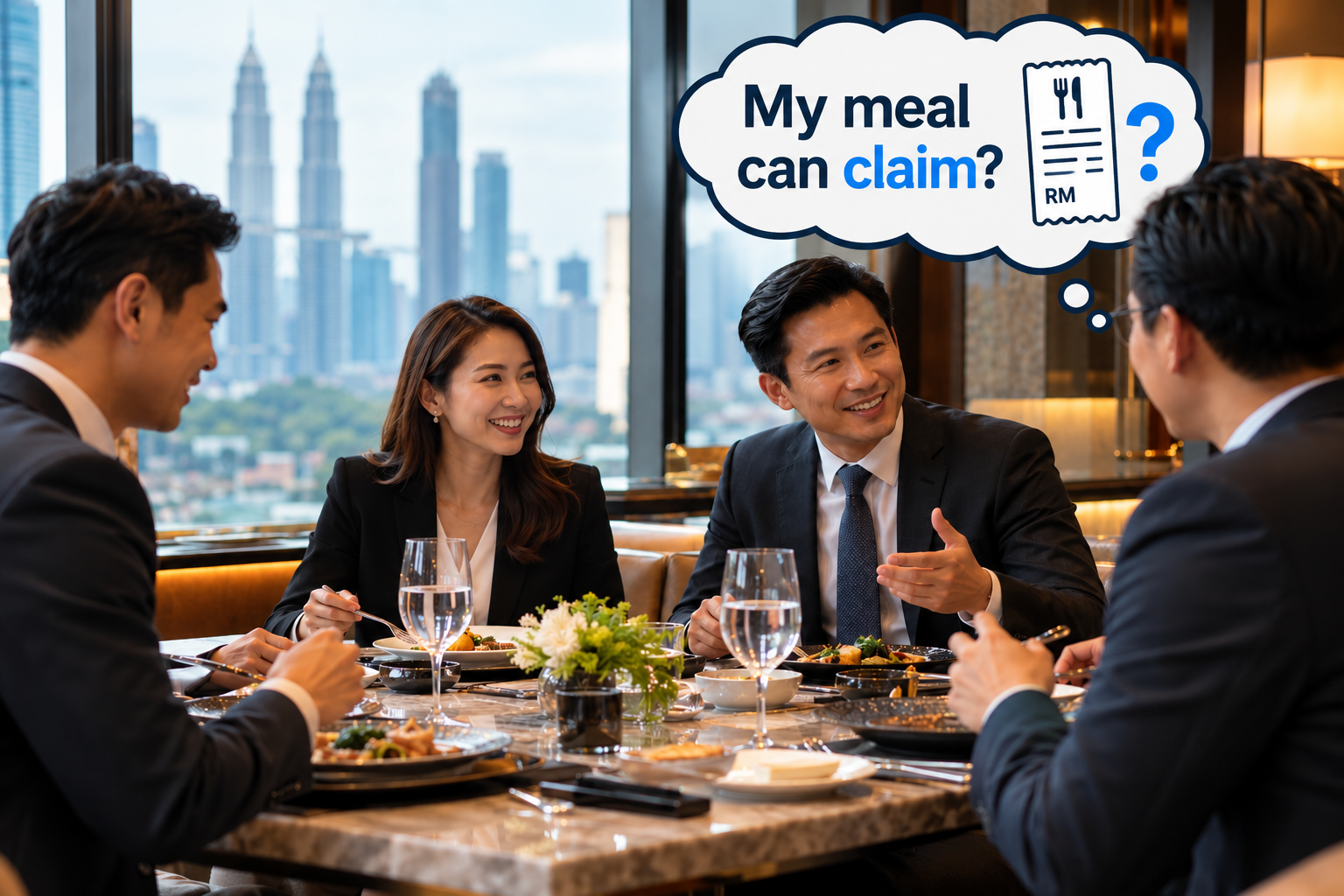
Taking customers out for meals is a common business practice. However, not all business entertainment expenses are fully tax-deductible in Malaysia.
Under paragraph 39(1)(l) of the Income Tax Act 1967, qualifying entertainment expenses are generally subject to a 50% deduction restriction unless they fall within a specified exception. In addition, the expense must satisfy the business-purpose requirement under subsection 33(1).
The tax treatment depends on the purpose of the entertainment, who receives it and whether it falls within a specific category permitted for a full deduction.
Let’s look at three common scenarios.
Scenario 1: Taking a Potential Customer Out for a Meal
Suppose your company spends RM1,000 taking a potential customer out for lunch to discuss a possible business opportunity. However, the transaction does not proceed.
Can the company claim a tax deduction?
Under Example 3 of LHDN Public Ruling No. 4/2015, entertainment provided to a potential customer in the circumstances described is not deductible because the expenditure does not satisfy the requirement under subsection 33(1) of the Income Tax Act 1967.
| Description | Amount |
|---|---|
| Total meal expense | RM1,000 |
| Tax-deductible amount | RM0 |
| Non-deductible amount | RM1,000 |
Important: This does not mean every expense involving a potential customer is automatically non-deductible. For example, food and drinks provided to potential or existing customers during the launch of a new product may qualify for a 100% deduction if the statutory conditions are satisfied.
The key consideration is the nature and purpose of the expenditure, not simply whether the person is a potential customer or whether a sale is eventually completed.
Scenario 2: Taking an Existing Customer Out for a Meal
Suppose your company spends RM1,000 taking an existing customer out for lunch to maintain the business relationship, discuss general business matters or express appreciation for their continued support.
If the expense is wholly and exclusively incurred in producing the company’s gross income but does not fall within a category eligible for a 100% deduction, the general 50% restriction applies.
| Description | Amount |
|---|---|
| Total meal expense | RM1,000 |
| Tax-deductible portion (50%) | RM500 |
| Non-deductible portion (50%) | RM500 |
The fact that the customer has previously purchased goods or services from your company does not automatically qualify the entertainment expense for a 100% deduction.
The company should consider the actual purpose of the meal and retain supporting documents, such as receipts, the names of attendees and a record of the business purpose.
Scenario 3: Entertainment Wholly Related to Sales
Suppose your company spends RM1,000 on food and drinks for customers during a new product launch or another qualifying sales-related activity.
If the entertainment is wholly related to sales arising from the business and satisfies the statutory requirements, it may qualify for a 100% tax deduction under proviso (vii) to paragraph 39(1)(l) of the Income Tax Act 1967.
| Description | Amount |
|---|---|
| Total qualifying entertainment expense | RM1,000 |
| Tax-deductible portion (100%) | RM1,000 |
| Non-deductible portion | RM0 |
Examples identified in LHDN Public Ruling No. 4/2015 include:
- Food and drinks provided during the launch of a new product.
- Redemption vouchers or gifts given for qualifying purchases.
- Free gifts for purchases exceeding a specified amount.
- Lucky draw prizes awarded to customers for purchases made.
- Incentive trips given to dealers for achieving sales targets.
However, simply describing a meal as a sales meeting or sales promotion does not automatically make it 100% deductible. The company must be able to demonstrate that the expense falls within the relevant statutory exception.
What About Entertainment Provided to Suppliers?
This is an important distinction.
Under LHDN Public Ruling No. 4/2015, “entertainment related wholly to sales” refers to entertainment directly related to sales provided to customers, dealers and distributors, excluding suppliers.
Therefore, if a company takes an existing supplier out for a business meal, the expense generally qualifies for only a 50% deduction, provided it satisfies the business-purpose requirement and no other specific exception applies.
For example, if the company spends RM1,000 entertaining a supplier:
| Description | Amount |
|---|---|
| Total supplier entertainment expense | RM1,000 |
| Tax-deductible portion (50%) | RM500 |
| Non-deductible portion (50%) | RM500 |
The fact that the supplier is important to the company’s operations does not, by itself, qualify the entertainment expense for a 100% deduction under the sales-related entertainment exception.
Meals Provided to Employees
Expenses incurred on meals provided to a company’s employees may qualify for 100% tax deduction, subject to the applicable conditions under the Income Tax Act 1967. For example, meals provided to employees during company events or staff gatherings may qualify, depending on the circumstances.
However, a meal solely for a director should not automatically be treated as 100% tax-deductible. The tax treatment depends on the director’s capacity, the purpose of the meal and whether the expense falls within the relevant tax deduction provisions. A personal meal does not become tax-deductible merely because it is paid for by the company.
Quick Summary: Business Entertainment Tax Deduction
| Type of entertainment | General tax treatment |
|---|---|
| Potential customer entertained in circumstances that fail the business income requirement | Non-deductible |
| Potential or existing customers entertained during a qualifying new product launch | Potentially 100% deductible |
| Existing customer entertained for general relationship-building | Generally 50% deductible |
| Customer entertainment wholly related to qualifying sales | Potentially 100% deductible |
| Supplier entertainment for a business purpose | Generally 50% deductible |
| Private meal with family or friends | Generally non-deductible |
Final Takeaway
Before claiming a tax deduction for business entertainment, consider three questions:
- Business purpose: Was the expense wholly and exclusively incurred in producing the company’s gross income?
- Type of recipient and activity: Was the entertainment provided to a customer, dealer, distributor, supplier or employee, and for what purpose?
- Applicable tax rule: Does the expense qualify for a specific 100% deduction, or is it subject to the general 50% restriction?
Proper documentation is essential. Keep the receipts, identify the attendees, record the business purpose and retain evidence of any qualifying sales promotion.
The correct tax treatment depends on the facts and the applicable provisions of the Income Tax Act 1967. Do not assume that every customer meal is 50% deductible or that every sales-related meal is 100% deductible.
Reference: LHDN Public Ruling No. 4/2015 — Entertainment Expense
How CLPC Advisors Can Help
As a licensed tax firm in Malaysia, CLPC Advisors provides professional tax compliance and advisory services to help businesses understand their tax obligations and make informed tax decisions.
We can assist your business with:
- Tax Deductibility Review – Assess whether business entertainment expenses, including customer meals, supplier entertainment and sales promotions, qualify for tax deductions.
- Tax Compliance – Help ensure your tax computations and submissions comply with the Income Tax Act 1967 and relevant LHDN requirements.
- Tax Advisory – Provide guidance on the tax implications of business expenses and identify potential tax risks.
- Supporting Documentation – Advise on the records and supporting documents needed to substantiate your tax deduction claims.
Whether you are an SME or an established business, CLPC Advisors can help you navigate Malaysia’s tax requirements with greater confidence.
Need professional tax advice? Contact CLPC Advisors to discuss your business tax matters and how we can support your tax compliance and advisory needs.
Prepared & Reviewed By
Pang Cheng Leong (CL Pang ) is the Managing Director of CLPC Advisors Sdn Bhd, a professional services firm in Malaysia providing corporate tax, accounting, corporate secretarial and business advisory services.
He is a Chartered Accountant in Malaysia, Chartered Tax Practitioner, Licensed Income Tax Agent under Section 153 Income Tax Act Malaysia and Licensed Company Secretary, and has extensive experience advising Malaysian companies, startups and foreign investors on taxation, compliance and business structuring.
Professional affiliations: CA (Malaysia), CPA (Australia), CPA (Malaysia), ASEAN CPA, ACTIM
Disclaimer: This article is for general informational purposes only and does not constitute tax advice. Tax treatment depends on the specific circumstances and applicable Malaysian tax laws. Please consult a qualified tax professional for advice tailored to your situation.